Why Epoxy Is the Go-To Choice for Lehi Garage Floors
Epoxy floor coating has been the standard for residential garage floors across Utah County for decades — and for good reason. A properly installed epoxy system creates a hard, seamless surface that bonds directly to your concrete slab, resisting the oil drips, road salt, and chemical spills that a bare garage floor simply can't handle.
In Lehi and the surrounding area, garage floors take a beating. Our elevation brings temperature swings that cause bare concrete to absorb water, crack, and deteriorate. The freeze-thaw cycle is relentless: water seeps into porous concrete in winter, freezes, expands, and chips the surface from the inside out. An epoxy coating eliminates that vulnerability by sealing the slab completely.
How Epoxy Floor Coating Works in Utah County's Climate
Utah County's semi-arid climate has two characteristics that directly affect concrete floor coatings: intense UV radiation from 300+ days of sunshine, and significant temperature swings between seasons. Standard epoxy is not UV-stable — it can amber or yellow when exposed to direct sunlight over time. For interior garages with windows or that receive afternoon sun through open doors, this matters.
Every professional epoxy installation in Utah should include a UV-stable polyaspartic or urethane topcoat that keeps the color true and the surface protected even in south-facing Lehi garages that take full summer sun. The result is a floor that looks as good in year five as it did on installation day.
Temperature during installation also matters. Epoxy requires concrete above 50°F to cure properly. Winter jobs need to be scheduled around optimal conditions using formulations designed for cooler temperatures — this is why choosing a local contractor familiar with Utah's seasonal patterns matters.
Our Epoxy Floor Coating Installation Process
Professional-grade diamond grinders open the concrete pores and create a mechanical profile for the epoxy to bond to. This is the most critical step — without it, any coating will eventually peel.
Cracks, divots, and control joints are filled and leveled using a flexible polyurea filler that moves with the concrete without cracking again.
A 100% solids epoxy base is rolled onto the prepared surface and allowed to partially cure. This layer is the foundation of the entire system.
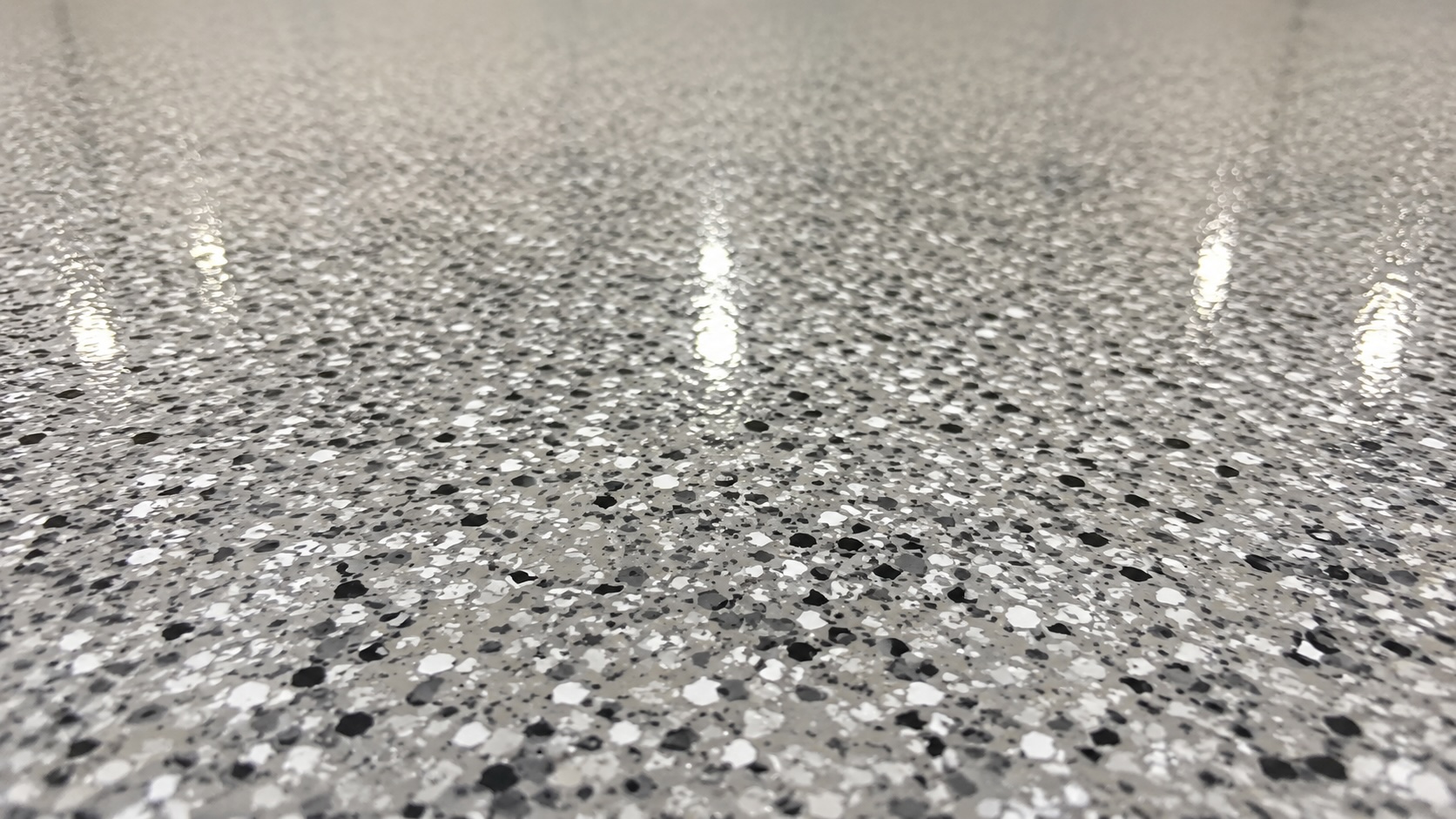
Decorative vinyl flake chips are broadcast into the wet base coat. Flakes add visual depth, hide minor imperfections, and provide natural texture for grip.
A clear polyaspartic or urethane topcoat seals the flakes and provides chemical resistance, UV stability, and the final gloss level of your choice.
Epoxy Color and Finish Options
Epoxy floor coatings come in a wide range of solid colors, blended flake systems, and custom finishes. The most popular options for Lehi garage floors include:
- Full-broadcast flake systems — the most popular choice; decorative chip pattern in dozens of blends, hides tire marks and dirt
- Solid color epoxy — clean, uniform look in any color; shows more dirt but offers a sharp, modern aesthetic
- Quartz aggregate systems — colored quartz sand broadcast into the base coat; extremely durable, high-traction surface popular for workshops and commercial applications
- Metallic epoxy — pigmented metallic powders create a marbled, high-end look; best for showroom floors and man caves
Ready to upgrade your Lehi garage floor? Request a free estimate or call us at (385) 210-1565. We also serve concrete coating needs throughout Utah County.